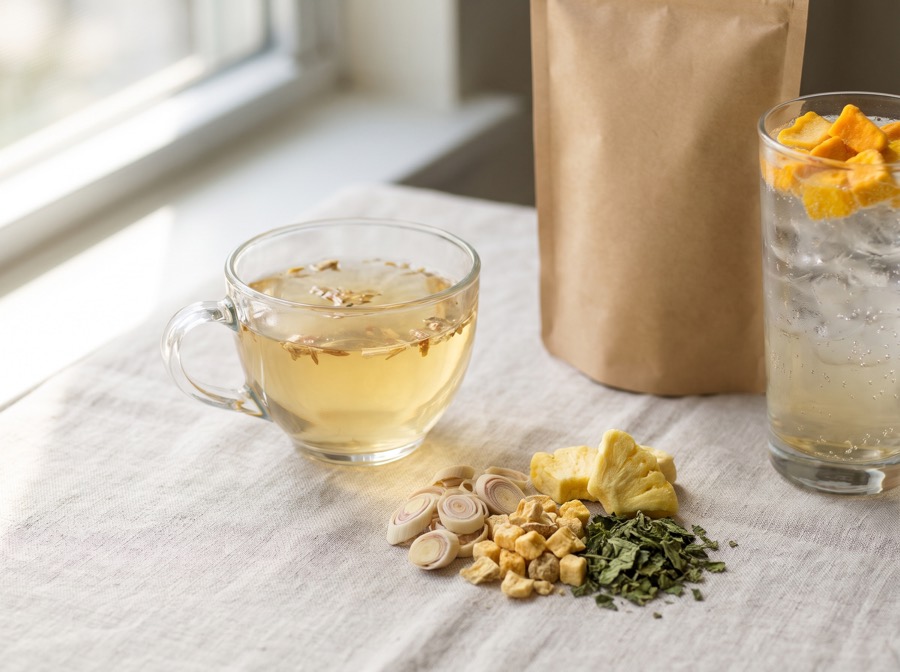
Freeze-dried ingredients, explained for product developers.
What freeze drying does to a herb or vegetable, how it compares with hot-air and sun drying, where freeze-dried ingredients are used, and what to ask before you specify one.
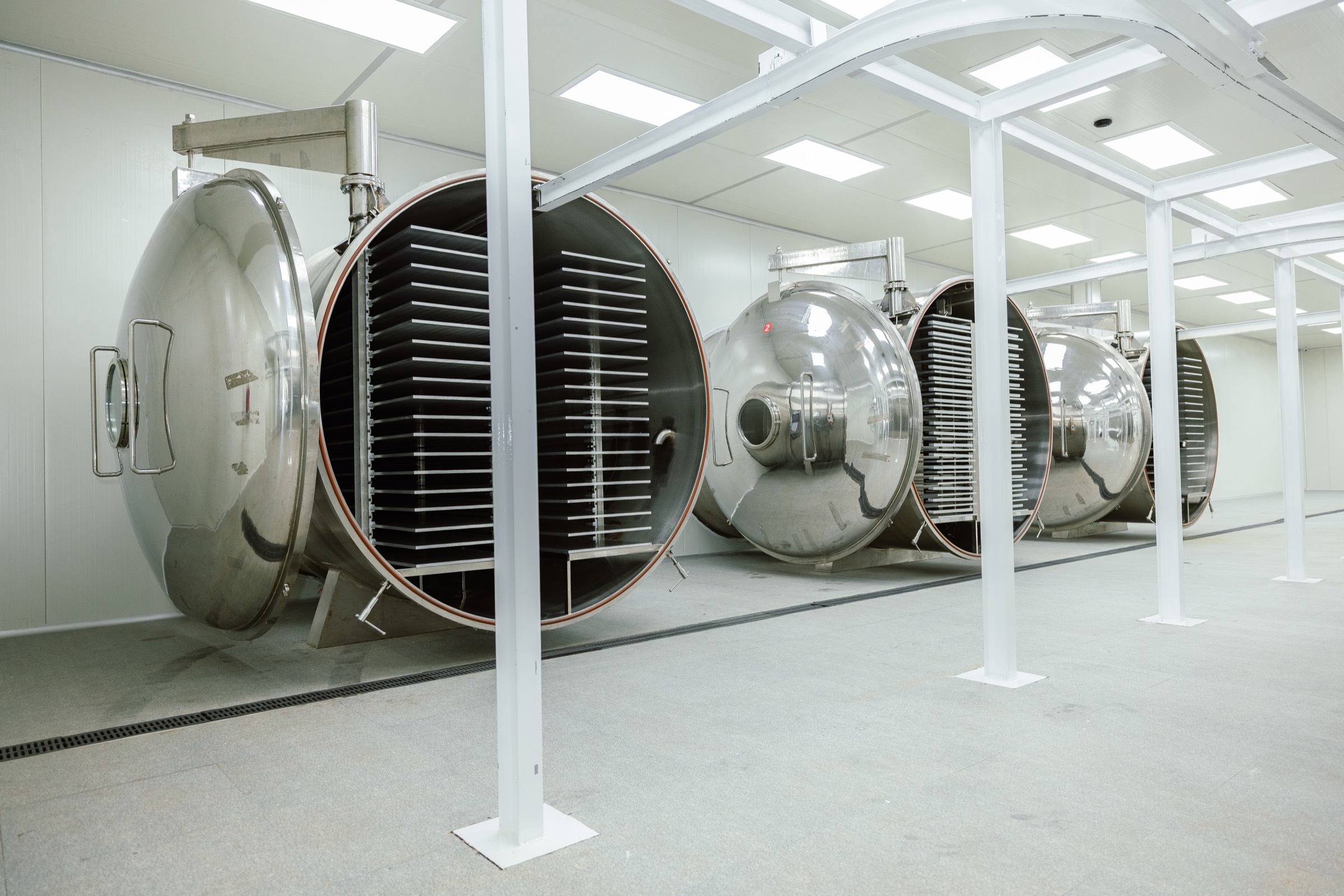
Freeze drying removes water from frozen food by sublimation under vacuum. The crop is frozen solid, then the ice turns straight into vapor without melting. The product stays cold while it dries, so the piece keeps its shape and its cut.
1
Freeze
The washed, cut crop is frozen solid, so its water becomes ice. Fast freezing makes small ice crystals and less damage to the cell structure.
2
Dry under vacuum
Under vacuum, with gentle warming, the ice turns straight to vapor without melting. Drying moves from the outside of each piece inward. This is the longest stage.
3
Finish and pack
Once the ice is gone, a little water is still bound in the cells. A small rise in temperature drives it off. The dry product goes straight into metalized pouches.
Heat drives most drying losses: volatile oils evaporate, chlorophyll breaks down and heat-sensitive compounds degrade. Hot-air drying uses that heat; spray and drum drying start from a liquid or puree and make only powders or flakes; sun drying keeps the cut but leaves the crop in the open air for days.
02 — Freeze dried, hot-air dried, sun dried
How the drying methods compare.
Typical values from the published literature, not FD Harvest specifications. Results vary by crop, cut and process, so we send samples for you to judge on your own bench.
Freeze dried
Hot-air dried
Sun dried
Aroma and volatile oils
No hot air, so less of the volatile oil is driven off. In published trials on dill and spearmint, freeze-dried herb kept more of its aroma than hot-air-dried herb. Results vary by herb.
Hot air often causes a substantial loss of volatile compounds.
Significant losses of aroma are reported in reviews.
Color
Green herbs keep more of their chlorophyll and stay greener than hot-air-dried herbs. Not identical to fresh.
Chlorophyll breaks down and browning speeds up with heat.
Significant color loss is reported; the crop sits in light and heat for days.
Moisture
Typically a few percent: 1.5–4% is reported for freeze-dried vegetable and fruit powders. Your spec sheet gives the target for each ingredient.
Dried with heat to a spec limit, typically well above freeze-dried levels.
Depends on weather and drying time.
Water activity
Typically very low: 0.20–0.35 is reported for freeze-dried powders, and a well-designed process can get below 0.2. Microbes cannot grow below 0.60.
Low when dried to spec; depends on the final moisture reached.
Depends on the final moisture reached.
Microbiology
Not a kill step. Washed, graded crop goes into a closed vacuum chamber, a controlled process rather than the open air. The low water activity of the finished product stops microbes from growing but does not kill what is present. Lots are micro-tested in our own lab.
Not a kill step. Quality depends on the crop that goes in and how it is handled.
Not a kill step. The crop is exposed to dust, insects, birds and animals while it dries (FDA risk profile).
Texture and rehydration
Keeps the cut: rings, leaves, flakes, dice and pieces. Porous, so it takes up water quickly and comes back close to its original shape.
Keeps the cut but shrinks and case-hardens. Rehydrates more slowly and does not fully recover its structure.
Keeps the cut; exposed to the open air while it dries.
Heat-sensitive compounds
The product stays cold. In published studies, vitamin C in mango and allicin in garlic were retained better than with heat drying, and the low temperature avoids the heat that converts gingerols in ginger. Not every compound is unaffected.
Vitamin C and other heat-sensitive compounds degrade with temperature. Above about 70–80 °C, gingerols in ginger begin to convert.
Exposed to heat and light for days.
Quality over time
Hygroscopic, so it is packed straight after drying in barrier pouches. Kept sealed, it holds color, aroma and crunch. FD Harvest: 3 years in sealed packaging.
Depends on packaging, final moisture, oxygen, light and temperature.
Depends on packaging, final moisture, oxygen, light and temperature.
Process conditions
Frozen, then dried under vacuum at low product temperature in a closed chamber. Slow, and more costly to run.
Heated air over trays or belts, typically about 40–80 °C in published herb and vegetable trials.
Spread in the open and dried by sun and air over days. Low cost.
The figures are typical literature values, not measurements of our product. A spec sheet for each ingredient gives its moisture target, agreed with you at trial. Lots are micro-tested in our own lab.
03 — Where freeze-dried ingredients are used
Product types, and the cut that fits each.
These are the product formats brands are developing with freeze-dried ingredients now. Each card names the cut from our range that fits, and why freeze drying suits it.
Freeze-dried fruit snacks and crunchy candy
Crunchy fruit pieces, fruit-coated candy, dusted snack pieces.
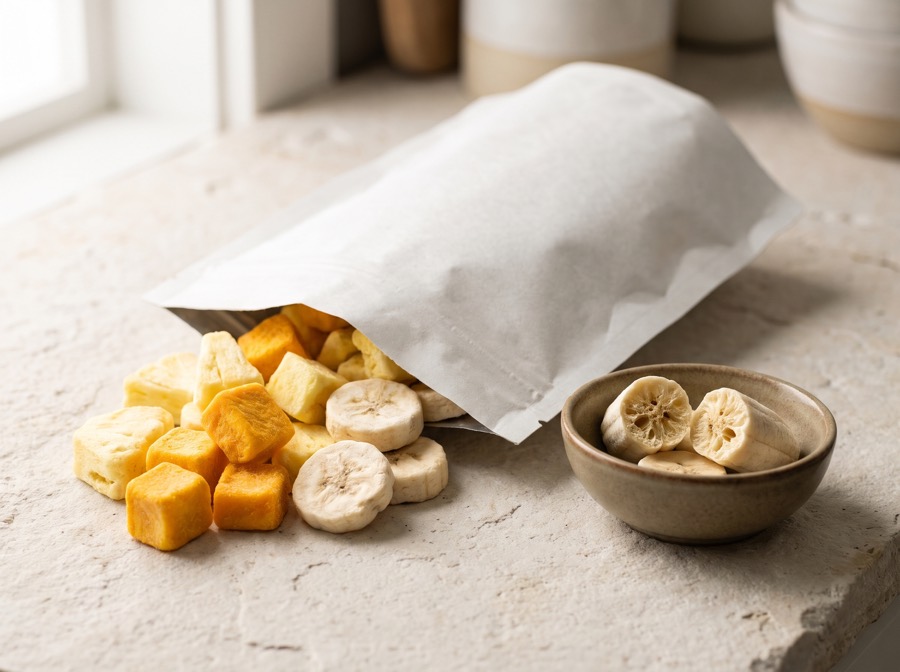
Form: Mango, pineapple and banana pieces or dice, or your own cut (conventional); fruit powders for coating.
Why freeze dried: A crisp, porous piece at low water activity; the crunch is the point of the format.
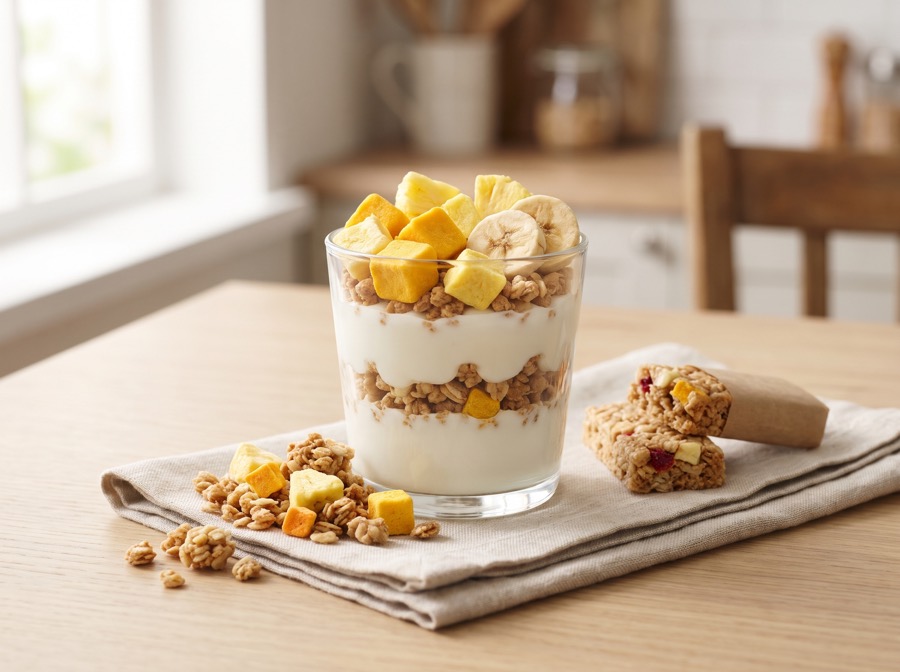
Breakfast cereal, granola, snack bars, chocolate, yogurt cups with a fruit topper.
Form: Mango, pineapple and banana pieces or dice; tomato and sweet corn pieces for savory mixes.
Why freeze dried: Stays crunchy at low water activity; in a moist or chocolate matrix, plan a barrier or match water activities.
Baby and toddler melts and snacks
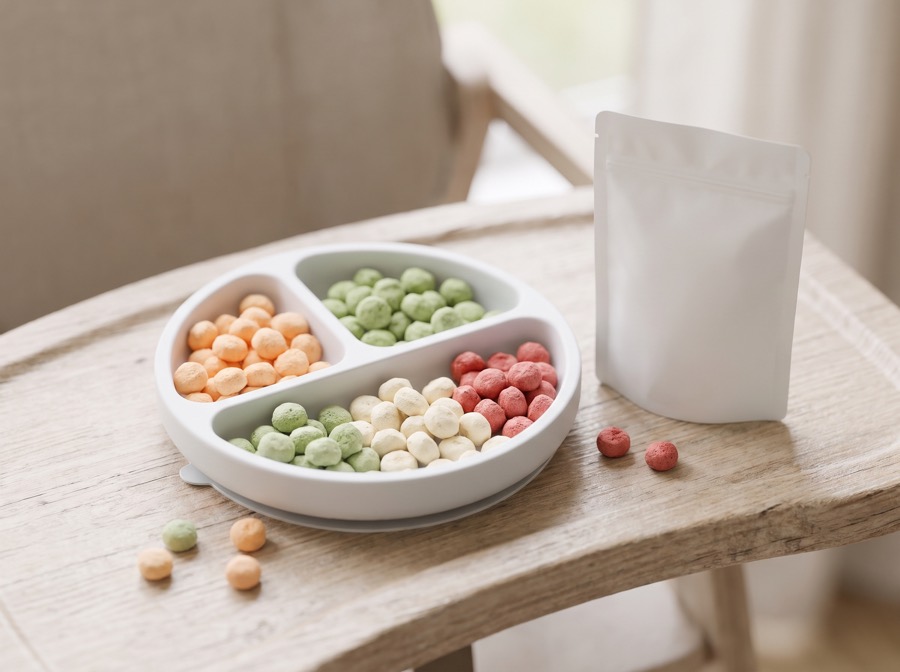
Fruit melts, vegetable melts, soft finger snacks.
Form: Tomato powder (certified organic); banana and mango powder (conventional). Carrot, broccoli and kale can be grown and powdered for your program.
Why freeze dried: Single-ingredient powders, with no major allergens in the product or the plant.
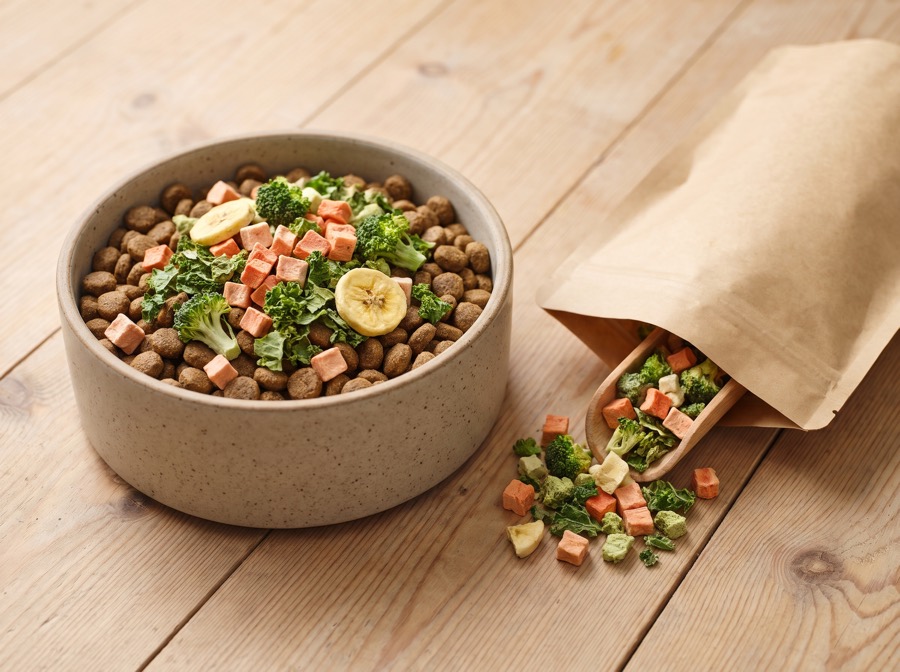
Pet food toppers
Dry toppers, meal mixers, treats.
Form: Parsley flakes; banana pieces. Kale, broccoli and carrot can be grown for your program. Ask us which crops suit a pet product.
Why freeze dried: Light, dry and no cold chain; pieces keep their shape and color on top of kibble.
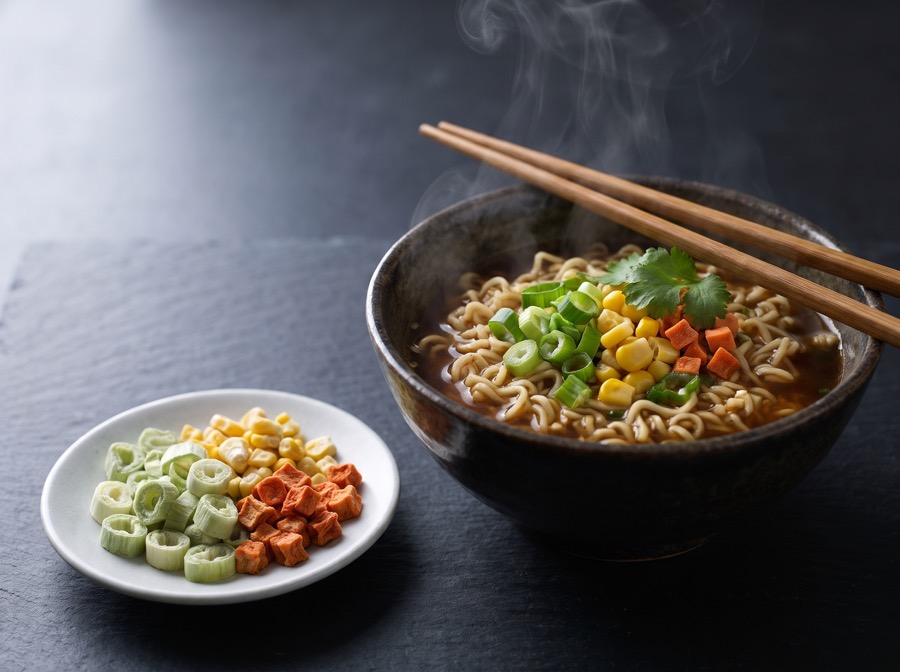
Instant soups, ramen and miso add-ins
Instant miso soup, cup soups, ramen vegetable sachets, broth kits.
Form: Spring onion and chive rings; cilantro flakes; diced garlic, ginger and onion; sweet corn pieces. Carrot can be grown for your program.
Why freeze dried: Pieces come back to shape in minutes in hot water; light to ship and no cold chain.
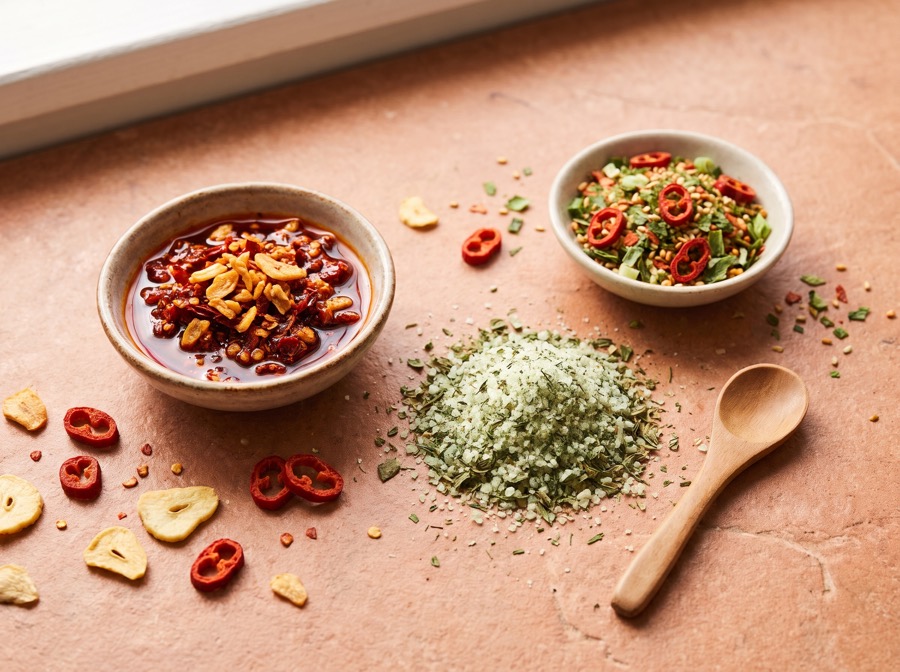
Seasonings, chili crisp, furikake-style toppings and herb salts
Chili crisp, furikake-style toppings, herb salts, rubs, seasoning mixes; dips, dressings and dairy blends.
Form: Chili rings; diced garlic, ginger and onion; spring onion and chive rings; dill, basil and oregano flakes; thyme and rosemary leaves; lemongrass rings; curry leaves.
Why freeze dried: Visible, crisp pieces that keep their cut and color; no hot air to drive off volatile oils.
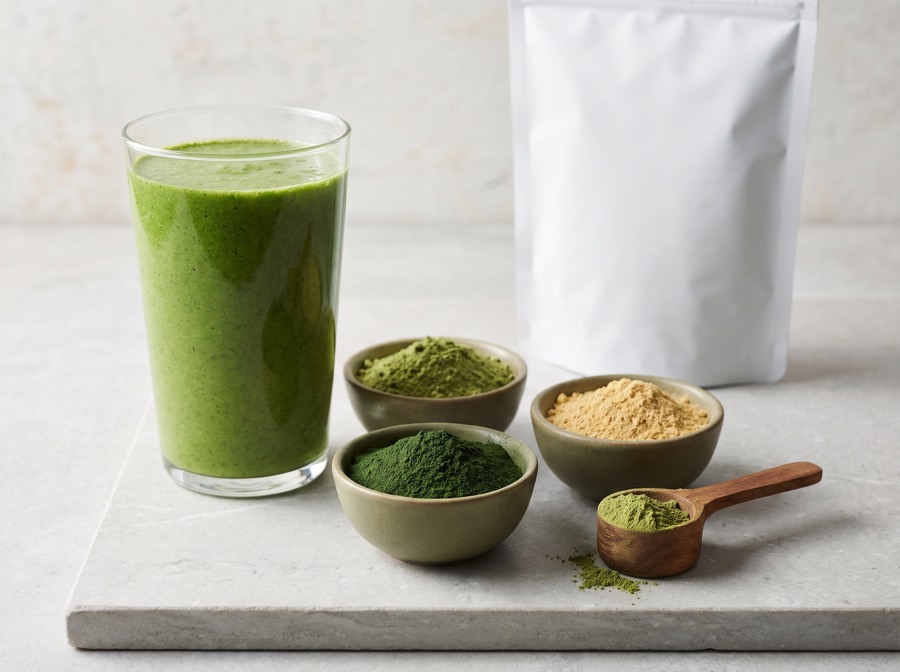
Greens and smoothie powders
Greens mixes, smoothie and shake powders, drink mixes.
Form: Ginger, mint and parsley powders (certified organic), single ingredient, powdered only when you ask. Kale, broccoli and carrot can be grown and powdered for your program.
Why freeze dried: Low product temperature avoids the heat that degrades vitamin C and converts gingerols.
Teas, functional beverages and drink toppers
Fruit and herb teas, single-serve tea blocks, drink mixes, cafe toppers and garnishes.
Form: Diced ginger; mint flakes; lemongrass rings; pineapple and mango pieces or powder.
Why freeze dried: Pieces keep their cut and color in a visible blend and take up water quickly, hot or cold.
04 — Questions
Questions buyers ask.
Do you send free samples?
Yes. Free samples are shipped globally from the plant at Lake Naivasha, with a spec sheet for each ingredient. Tell us which ingredients, which cut, and what you are making.
What is the minimum order?
There is no minimum order. Pilot runs are developed with you, run small at the plant, then scaled.
Is freeze drying a kill step?
No. Drying is not a validated kill step, freeze drying included. Our crop is washed and graded the day it is picked, then frozen and dried in a closed vacuum chamber, not in the open air. Low water activity stops microbes from growing. Lots are micro-tested in our own lab.
What does the spec sheet cover?
Every ingredient has a spec sheet. Lots are micro-tested in our own lab. The moisture target is on the spec sheet and agreed with you at trial, with cut and lot size. Every lot is traceable from field to pouch: farm, plot, harvest date, dryer run and packing date.
What are the moisture and water activity?
Freeze-dried ingredients typically finish at a few percent moisture and very low water activity, below the level at which bacteria, yeasts and molds can grow. Those are typical literature values. The moisture target for each of our ingredients is on its spec sheet and agreed with you at trial.
Organic or conventional?
The herbs and vegetables in the range are certified organic: USDA Organic and EU Organic, certificate on request. Mango, pineapple and banana are conventional. Powders can be made certified organic.
What about allergens?
None of the major allergens are in the product or in the plant. The allergen statement is available on request.
Can you make custom cuts, powders and blends?
Yes. Custom cuts, powders and blends are developed with you, piloted small at the plant, then scaled, with no minimum order. We plan the crop against your volumes on our own farms. Broccoli, beans, carrots and kale can be grown and freeze dried alongside the range. Products are single ingredients and never powdered unless you ask.
What is the shelf life?
Three years in sealed packaging. Freeze-dried ingredients take up moisture and oxygen from the air, so we pack them straight after drying in metalized pouches. Once opened, reseal and keep dry.
How is it shipped, and what is the lead time?
Scheduled supply ships from the plant by sea from Mombasa or by air. Lead time is confirmed per ingredient. Into the US, AGOA gives duty-free entry, extended to December 31, 2028.
Contact us to discuss your product requirements.
Tell us which ingredients, which cut, and what you are making, and we will ship free samples from the plant with a spec sheet for each.
 Freezedry Harvest